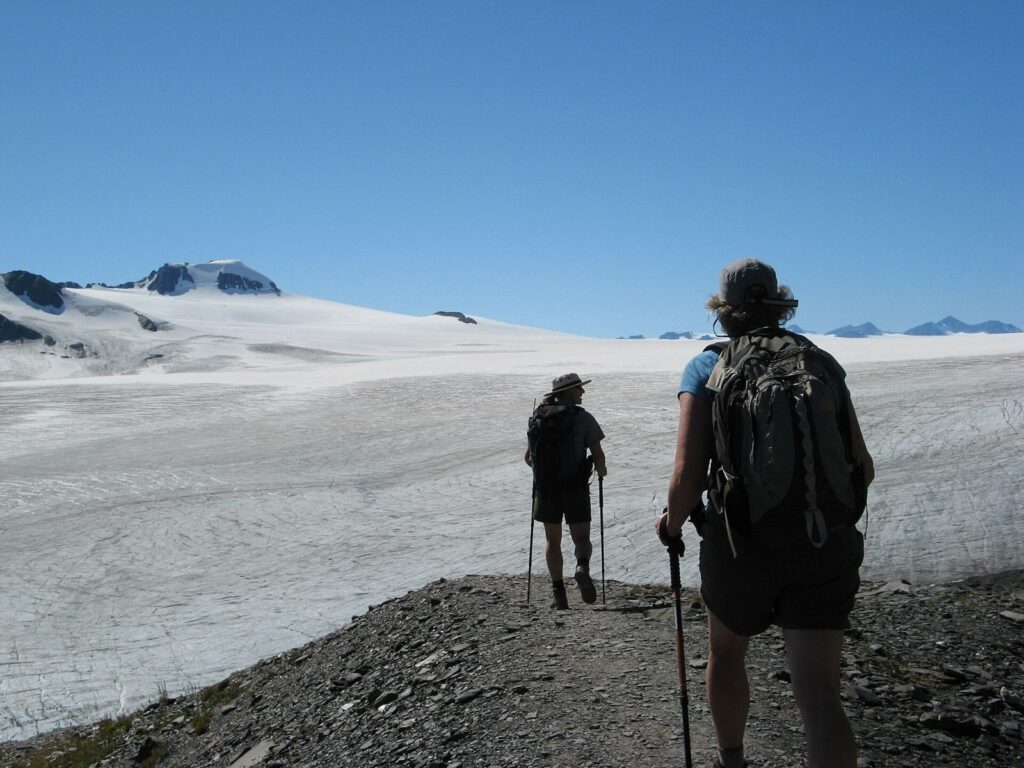
Alaska has everything from paved strolls to the largest trailless wilderness in the country. You don’t have to be a hardcore expedition hiker to enjoy it, but you do need to respect the weather, the water, and the wildlife.
Disclosure: this page contains affiliate links, marked with /go/. If you book or buy through them, we may earn a commission at no extra cost to you. Read our affiliate disclosure.
Classic day hikes
- Harding Icefield Trail, Kenai Fjords National Park (Seward): about 8 miles round trip with roughly 3,000 feet of climbing from the Exit Glacier area to a viewpoint over a 700-square-mile icefield. Allow 6–8 hours, and expect snow on the upper trail well into summer (NPS trail info). The shorter, easier Exit Glacier trails are nearby.
- Flattop Mountain, Chugach State Park (Anchorage): Alaska’s most-climbed peak, reached from the Glen Alps trailhead. It’s short but steep, with a scramble near the top and city-to-Denali views on clear days. There’s a parking fee (Alaska State Parks).
- Denali park entrance area: Mount Healy Overlook, Horseshoe Lake, and Savage River trails. You can also ride a transit bus deeper into the park and hike off-trail on open tundra.
- Juneau: Mount Roberts from downtown, and Mendenhall Glacier area trails.
- Matanuska Glacier (Glenn Highway): guided glacier walks across private land are the safe way to walk on the ice.
Multi-day trips
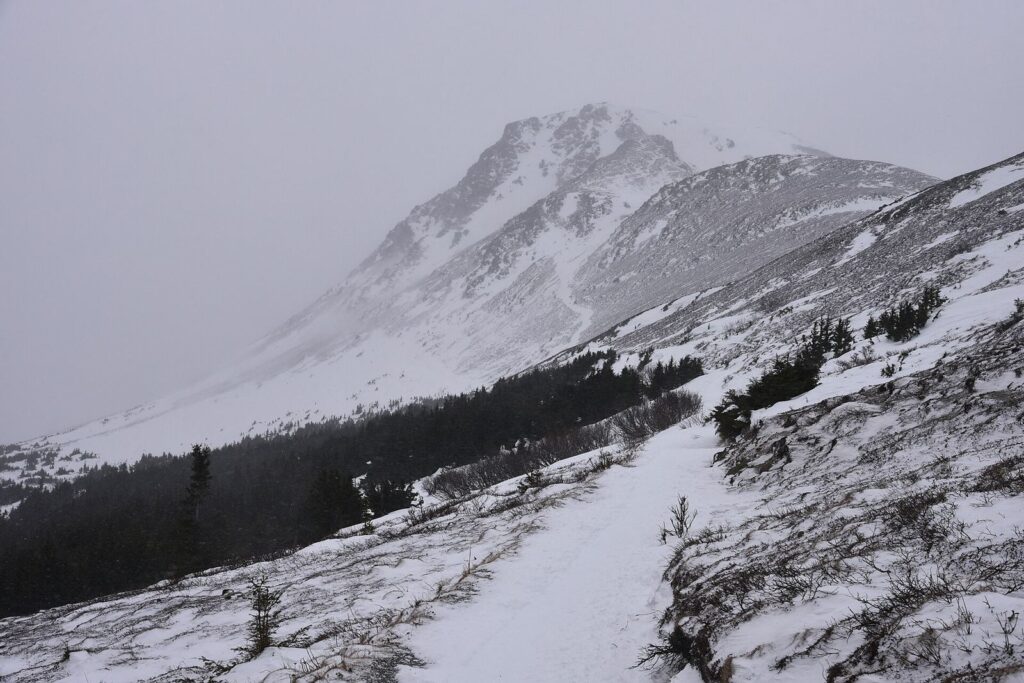
- Chilkoot Trail (Skagway–Bennett, BC): the historic 33-mile Klondike Gold Rush route. It crosses an international border, and you need permits and campsite reservations from the NPS and Parks Canada (NPS Chilkoot).
- Resurrection Pass Trail (Kenai Peninsula): a 39-mile Forest Service trail with reservable public-use cabins along the way.
- Denali backcountry: trailless units with quotas. Overnight backpackers need a free permit from the Backcountry Information Center and must carry a bear-resistant food container.
- Crow Pass (Girdwood–Eagle River): about 21 miles past glaciers and gold-mining ruins, including a serious river ford.
Prefer a guide? See guided Alaska hikes on GetYourGuide.
Bear safety basics
- Make noise in brushy areas and hike in groups.
- Carry bear spray where you can reach it, and know how to use it (bear spray at REI). You can’t carry bear spray on commercial flights, so buy it in Alaska and give it away before you fly home.
- Store food, trash, and scented items in bear-resistant containers or lockers, and cook away from your tent.
- Learn the difference between defensive and predatory encounters. The ADF&G bear safety page and NPS bear safety are good primers.
Other hazards
- River crossings are a leading cause of backcountry deaths in Alaska. Glacial rivers are fast, silty, and highest in the afternoon. Cross early, unbuckle your hip belt, and turn back if in doubt.
- Weather: hypothermia is a risk even in July. Pack rain gear and insulation every time (rain jackets, base layers).
- Glaciers have hidden crevasses. Don’t walk on them without training or a guide.
- Mosquitoes peak in June and July. Bring repellent and a head net.
- Communication: most trails have no cell service. Leave a trip plan with someone and consider a satellite messenger or phone. Fairbanks Sat Phone explains backcountry satellite options.
Ready for a big trip? See backpacking packs at REI and our full Alaska packing list.