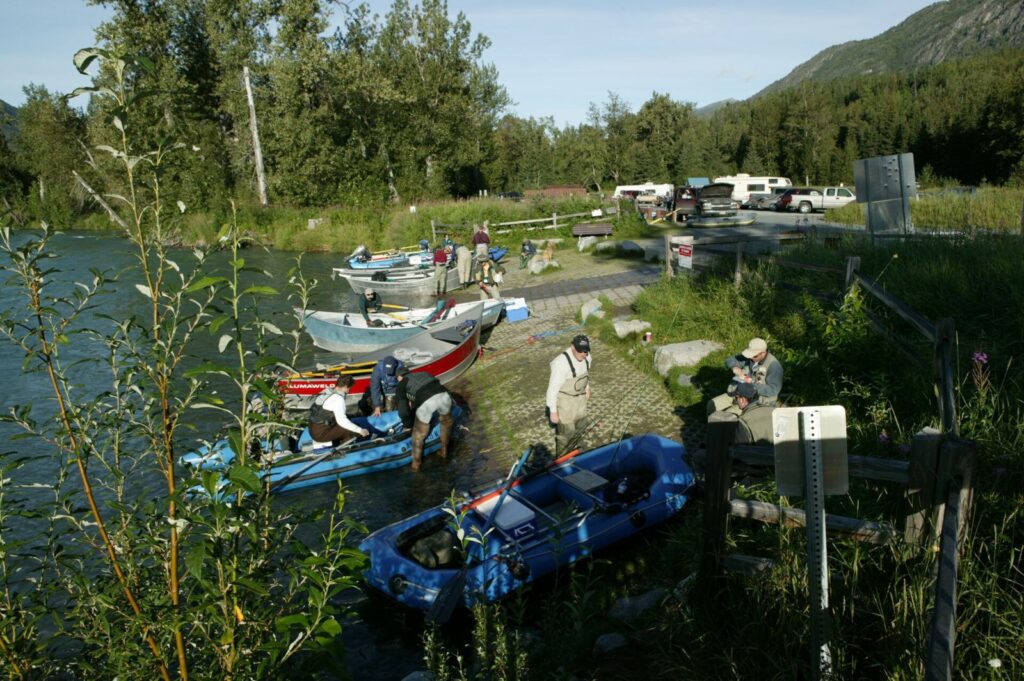
Alaska has five species of Pacific salmon, halibut that can top 200 pounds, wild rainbow trout, and Arctic grayling. A guided charter is the easiest way in for most visitors. The guide brings the gear, local knowledge, and the boat, and often handles cleaning your fish.
Disclosure: this page contains affiliate links, marked with /go/. If you book or buy through them, we may earn a commission at no extra cost to you. Read our affiliate disclosure.
Licenses: what nonresidents need
Anglers 16 and older who aren’t Alaska residents need a sport fishing license, and anyone fishing for king (Chinook) salmon also needs a king salmon stamp. Prices are set by the Alaska Department of Fish and Game:
| Nonresident license | Price |
|---|---|
| 1-day | $15 |
| 3-day | $30 |
| 7-day | $45 |
| 14-day | $75 |
| Annual | $100 |
The nonresident king salmon stamp uses the same tiers ($15 to $100). Buy online from ADF&G and carry a copy. Some charters sell licenses on board, but don’t count on it. Regulations, bag limits, and emergency closures change in season, especially for kings. Check ADF&G’s emergency orders for the water you’re fishing.
What to target, and when
- King (Chinook) salmon: generally late May to July. Many king fisheries now have tight restrictions or closures to protect weak runs, so check before you book.
- Sockeye (red) salmon: roughly June to August on the Kenai Peninsula, including the famously crowded Russian River confluence. They’re prized eating.
- Coho (silver) salmon: roughly late July to September. Seward holds a well-known silver salmon derby in August.
- Pink and chum salmon: mid-summer. Pinks run in big numbers in even-numbered years in much of Southcentral Alaska.
- Halibut: best from about May to September out of Homer, Seward, Valdez, Whittier, and Southeast ports. Charter halibut rules (bag and size limits, days closed) are set each year by federal and state managers and often differ from rules for unguided anglers.
- Trout, char, and grayling: fly-out lodges in Bristol Bay and the Kenai River offer world-class fly fishing for rainbows.
Book a tour (affiliate) Alaska fishing trips on GetYourGuide
Affiliate widget: we may earn a commission if you book, at no extra cost to you. Tours, prices and ratings are shown by GetYourGuide and are not AK Adventure reviews. About our affiliate links.
Types of trips
- Saltwater charters (half or full day) for halibut, rockfish, lingcod, and salmon. Full-day halibut trips can run far offshore in open water, so seasickness prep matters.
- Drift boat and power boat river trips on the Kenai, Kasilof, and other rivers.
- Fly-out fishing by floatplane to remote lakes and streams. It’s expensive, but you’ll likely have the water to yourself.
- Combo trips that pair halibut with salmon, or fishing with bear viewing.
Browse and compare Alaska fishing charters on Viator. Before booking, confirm what’s included: license, tackle, rain gear, fish cleaning, and the deckhand tip.
Getting your catch home
Fish processors in Homer, Seward, Soldotna, and other fishing towns will fillet, vacuum-pack, freeze, and ship your catch, or pack it in insulated fish boxes you can check as airline baggage. Ask your charter which processor they work with and what they charge per pound.
Practical tips
- Waterproof boots like XtraTufs are the unofficial Alaska fishing uniform (XtraTuf boots on Amazon), along with good rain pants and a jacket.
- Bears fish the same rivers. Keep a clean camp, carry bear spray on rivers, never leave fish unattended, and follow the “stop, chop, and throw” carcass rules on the Russian River.
- Combat fishing is real. The Russian River and Kenai sockeye runs draw shoulder-to-shoulder crowds. Go early or hire a guide who knows quieter water.