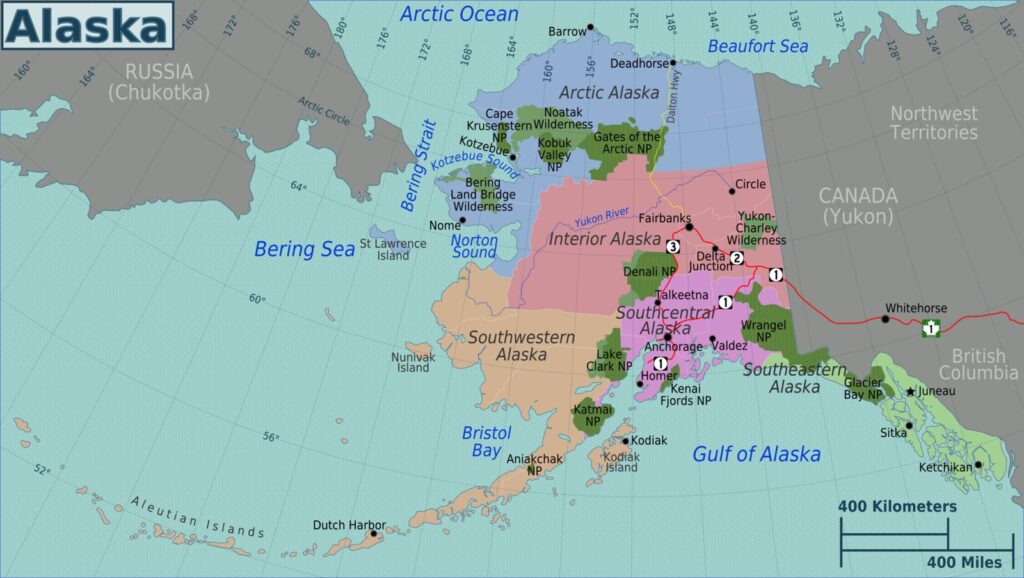
Alaska is more than twice the size of Texas and spans several climate zones, from coastal rainforest to Arctic tundra. Travel planners usually divide it into five regions. Understanding them is the first step to a realistic itinerary.
Southcentral Alaska
Most visitors start here. Anchorage is home to about 40% of the state’s population and its main airport. Within a few hours’ drive you’ll find the Kenai Peninsula (Seward, Kenai Fjords, Homer, salmon rivers), Prince William Sound via Whittier and Valdez, the Matanuska–Susitna Valley, Talkeetna, and the Chugach Mountains. It’s the best region for a first trip with a car or train. See glacier cruises, fishing, and road trips.
Interior Alaska
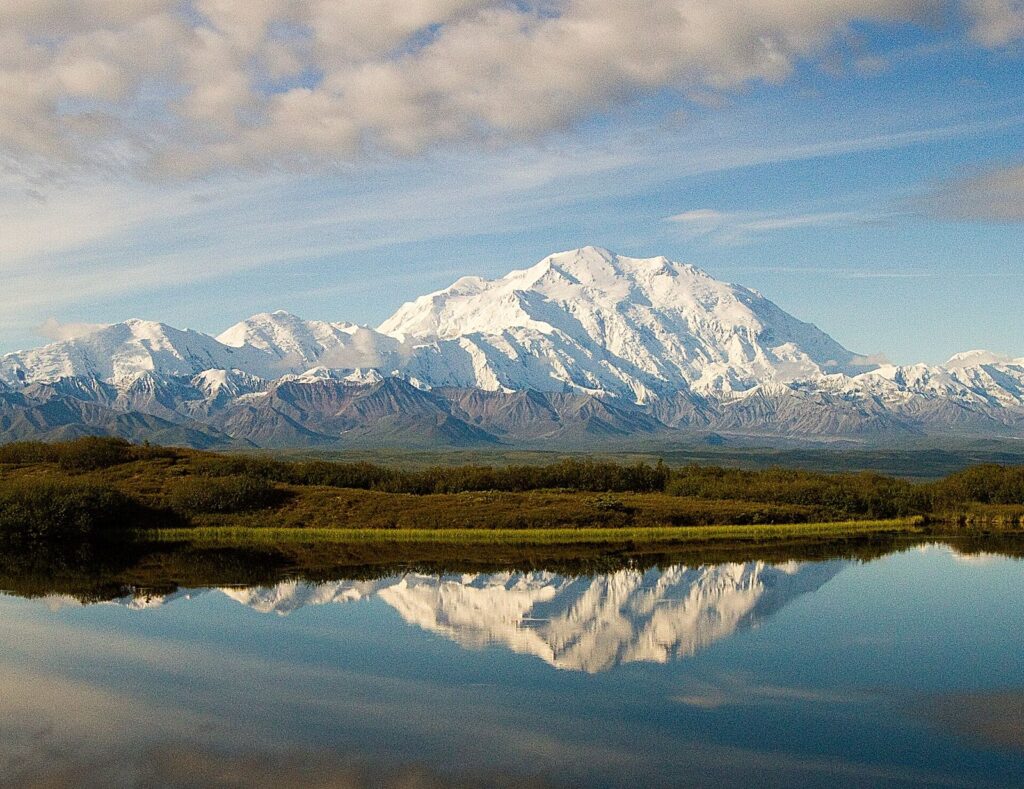
The Interior is the vast heart of the state, between the Alaska Range and the Brooks Range. It holds Denali National Park and Fairbanks, the second-largest city. Summers are warm and sunny with long days, and winters are very cold, dry, and dark, which is ideal for the northern lights. Wrangell–St. Elias National Park straddles the Interior and Southcentral. See Denali.
Southeast Alaska (the Inside Passage)
A narrow strip of islands and coastal mountains along British Columbia, with temperate rainforest, fjords, glaciers, and Alaska Native cultures, especially Tlingit, Haida, and Tsimshian. Most towns, including Juneau (the capital), Ketchikan, Sitka, Skagway, Haines, and Wrangell, aren’t connected to the main road system. You get there by cruise ship, the Alaska Marine Highway ferry, or air. Highlights include Glacier Bay National Park, the Mendenhall Glacier, and whale watching. Expect rain and bring a good shell.
Arctic Alaska (the Far North)
North of the Brooks Range. This region has the Dalton Highway, Utqiaġvik (formerly Barrow, the northernmost US town), Kotzebue, Prudhoe Bay, Gates of the Arctic and Kobuk Valley National Parks, and the Arctic National Wildlife Refuge. It has midnight sun in summer, polar night in winter, and very limited services. See Arctic Circle & Dalton Highway.
Southwest Alaska
The Alaska Peninsula, Bristol Bay, Kodiak Island, the Aleutian Islands, and the Yukon–Kuskokwim Delta. It’s world famous for brown bears (Katmai, Kodiak, Lake Clark) and salmon (Bristol Bay has the world’s largest sockeye run). Nearly all travel is by small plane or boat. See bear viewing.
Which region should you visit?
- First trip, 7–10 days in summer: Southcentral plus Denali. Many travelers finish in Fairbanks.
- Cruise: Southeast, often with a land extension to Denali.
- Winter or aurora: Fairbanks and the Interior.
- Bucket-list wildlife: add a Southwest bear fly-out.
- Adventure road trip: the Interior and Arctic via the Dalton Highway.
Official statewide trip-planning resources are at TravelAlaska.com, the state’s official travel site.