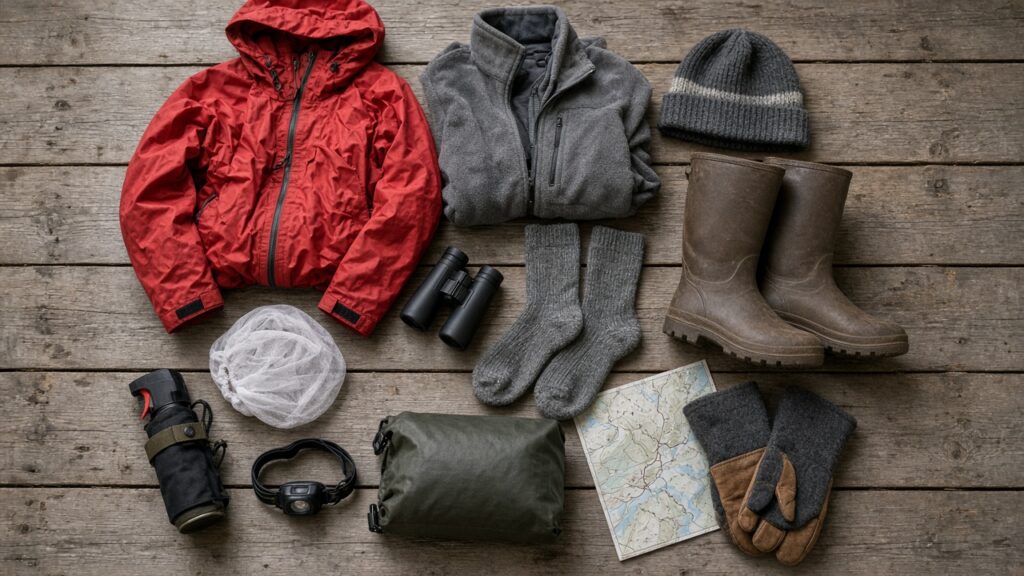
Alaska’s weather changes fast, and conditions on a glacier cruise or mountain ridge are nothing like those in town. The secret isn’t packing a lot. It’s packing the right layers.
Disclosure: this page contains affiliate links, marked with /go/. If you book or buy through them, we may earn a commission at no extra cost to you. Read our affiliate disclosure.
The layering system
- Base layer: merino wool or synthetic, never cotton, which stays wet and cold (base layers at REI).
- Mid layer: a fleece jacket or light puffy.
- Insulation: a down or synthetic jacket. In winter, a heavy parka rated for subzero temperatures (insulated jackets).
- Shell: a truly waterproof, breathable rain jacket and rain pants (rain jackets). This is the single most important item for coastal Alaska.
Summer packing list (May–September)
- Rain jacket and rain pants
- Fleece or light puffy, plus a warm hat and light gloves for boat days
- Comfortable waterproof hiking shoes or boots, and rubber boots such as XtraTufs for fishing and beaches (XtraTufs)
- Insect repellent and a mosquito head net for June and July in the Interior
- A sleep mask for the midnight sun
- Binoculars and a camera with a zoom lens for wildlife
- A daypack, water bottle, and snacks
- Sunglasses and sunscreen, especially on glaciers and water
- A dry bag for boat and floatplane trips
Winter packing list (November–March)
- Expedition-weight base layers, top and bottom
- A heavy insulated parka and insulated snow pants
- Insulated winter boots rated to −40°F, wool socks, and spares
- Mittens over liner gloves, a warm hat, and a neck gaiter or balaclava
- Chemical hand and toe warmers
- A sturdy tripod and extra camera batteries for the aurora
- A headlamp with a red-light mode
- Traction devices (microspikes) for icy sidewalks and trails
Many aurora tours and lodges loan or rent parkas and boots. Ask before you buy expensive gear for a short trip.
Safety essentials
- Bear spray: carry it when hiking or fishing (bear spray at REI). It’s not allowed in checked or carry-on bags on commercial flights, so buy it in Alaska.
- Communication: outside towns and highways, cell service is limited or nonexistent. For backcountry trips and remote drives like the Dalton Highway, carry a satellite phone or satellite messenger. Fairbanks Sat Phone covers satellite phone options.
- First-aid kit, a water filter for backcountry trips, and a paper map. Don’t rely on your phone alone.
- For road trips, a vehicle emergency kit with a spare tire, jumper cables, warm clothing, and food.
What you don’t need
- Formal clothes. Alaska is casual nearly everywhere.
- Bulky cotton hoodies and jeans for outdoor days.
- An umbrella on windy boat decks. Bring a hood instead.