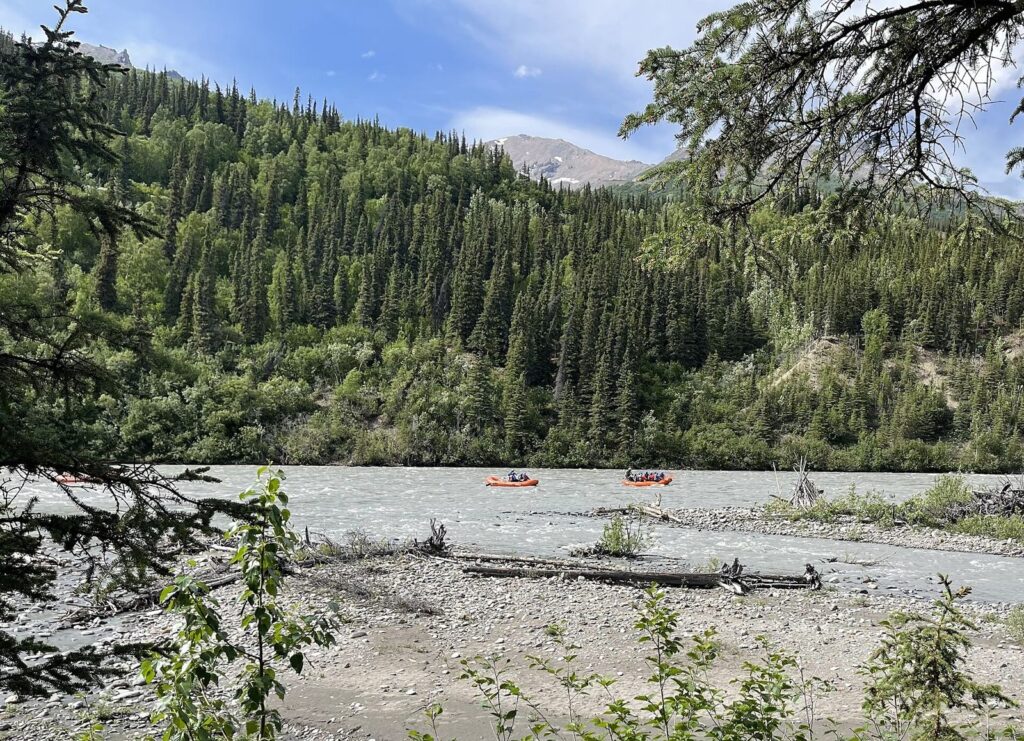
Alaska’s rivers run cold and silty with glacial melt, and its fjords are dotted with icebergs. A guided trip is the safe way to experience both. Whitewater guides provide drysuits and safety gear, and kayak outfitters pick sheltered routes and handle logistics.
Disclosure: this page contains affiliate links, marked with /go/. If you book or buy through them, we may earn a commission at no extra cost to you. Read our affiliate disclosure.
Whitewater rafting
- Nenana River (Denali): the most popular rafting near the Denali park entrance. Outfitters run a mellow scenic float upstream and a splashy canyon run through the Nenana River gorge (roughly Class III–IV) on the same river, in summer.
- Six Mile Creek (near Hope, Kenai Peninsula): about 90 minutes from Anchorage. Its three canyons with Class IV–V rapids make it one of the most challenging commercial runs in the state. Expect swim tests or other requirements.
- Kenai River: gentle, scenic floats near Cooper Landing, with turquoise water and good chances of eagles.
- Matanuska and Lowe Rivers: trips near the Matanuska Glacier and Keystone Canyon (Valdez).
Compare Alaska rafting trips on Viator.
Sea kayaking
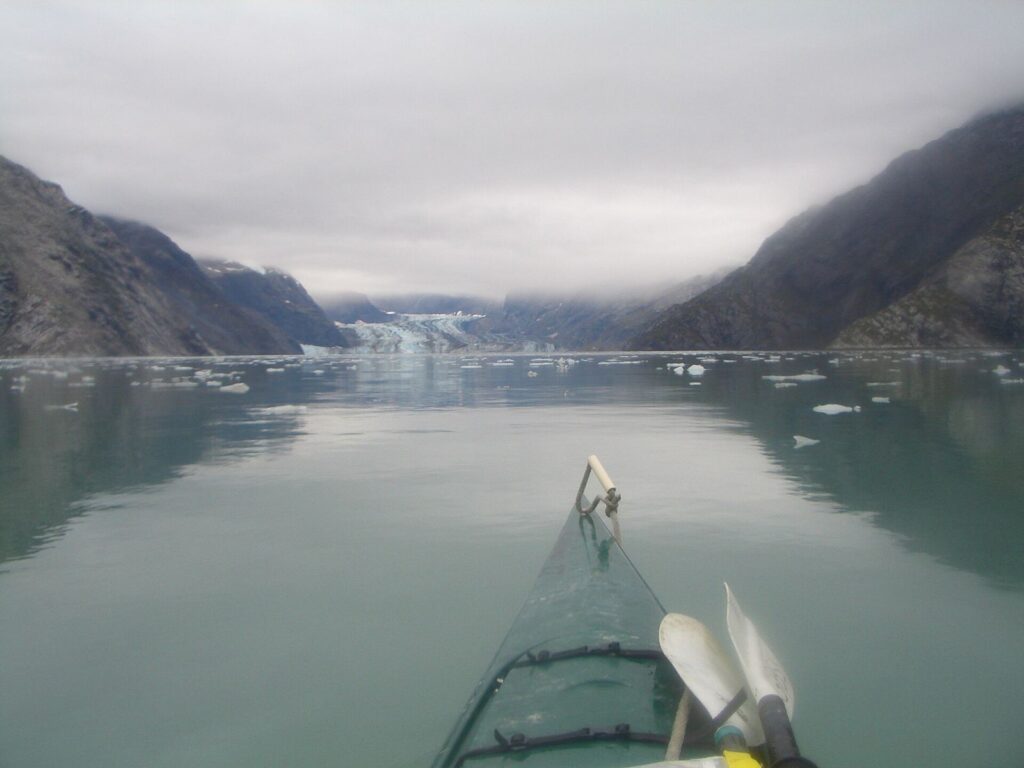
- Kenai Fjords (Seward): paddle Resurrection Bay from town, or take a water taxi to Aialik Bay or Northwestern Fjord for glacier-face paddling and overnight camping.
- Prince William Sound (Whittier and Valdez): calmer protected waters, waterfalls, and tidewater glaciers. Water taxis drop paddlers at remote beaches.
- Glacier Bay National Park (Gustavus): the day boat can drop experienced kayakers in the upper bay. You’ll need a backcountry orientation.
- Juneau and Ketchikan: half-day paddles that are easy to fit into a cruise stop.
Browse Alaska kayaking tours.
Book a tour (affiliate) Rafting and kayaking tours on GetYourGuide
Affiliate widget: we may earn a commission if you book, at no extra cost to you. Tours, prices and ratings are shown by GetYourGuide and are not AK Adventure reviews. About our affiliate links.
Safety in cold water
- Water temperatures are often in the 30s and 40s °F, even in summer. Cold-water shock can incapacitate a swimmer within minutes, so always wear a life jacket and the drysuit or wetsuit your outfitter provides.
- Stay well back from calving tidewater glacier faces. Falling ice can cause dangerous waves, and guides often keep a quarter to half mile away.
- Don’t paddle open coastal water without experience in cold-water rescue. Tides in places like Turnagain Arm and Cook Inlet are among the largest in North America.
- Pack electronics in a dry bag.