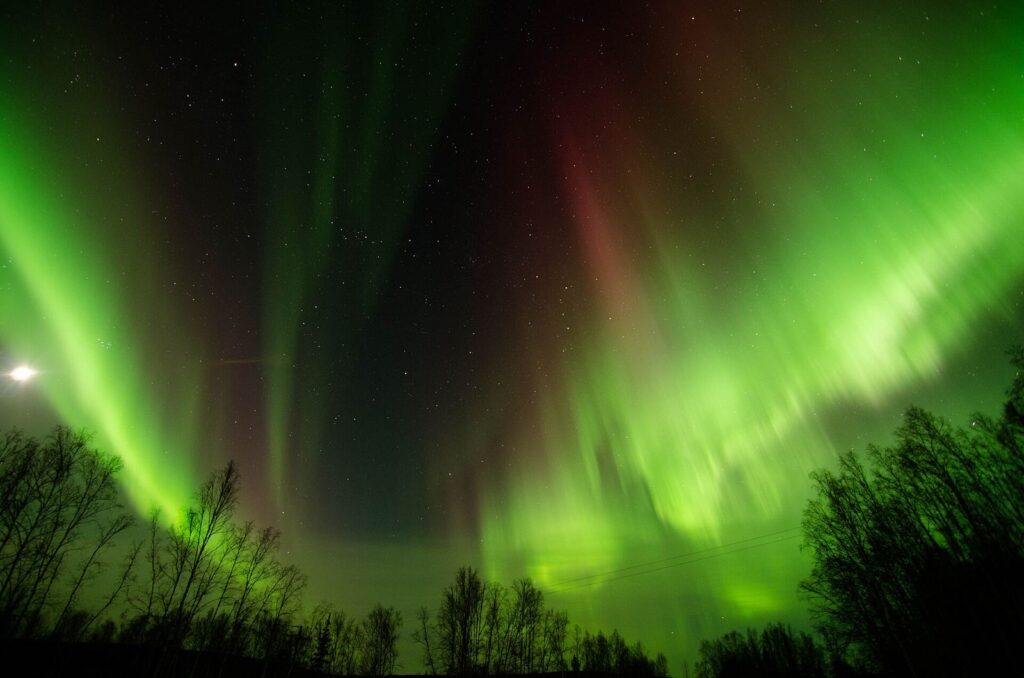
Fairbanks sits beneath the auroral oval, the ring of activity around the magnetic pole where the northern lights appear most often. That location, plus clear, dry inland winters, makes Interior Alaska one of the most reliable places in North America to see the aurora borealis.
Disclosure: this page contains affiliate links, marked with /go/. If you book or buy through them, we may earn a commission at no extra cost to you. Read our affiliate disclosure.
When is aurora season in Fairbanks?
Explore Fairbanks, the official visitor bureau, defines aurora season as August 21 through April 21. Outside that window the sky never gets dark enough: Fairbanks has near-continuous daylight around the June solstice. Within the season, the main variables are darkness and cloud cover, not the aurora itself.
- Late August–September: lakes and rivers aren’t frozen yet, so you can catch reflections. Nights are mild. Fall colors peak in late August and early September.
- October–November: long nights, but early winter can be cloudy.
- December–February: the longest, coldest nights. Temperatures of −20°F to −40°F are normal, and the clear high-pressure nights are often the coldest ones.
- March: a favorite for many visitors. You still get plenty of darkness, the days are longer and milder, and winter events such as the World Ice Art Championships are on.
How many nights should you stay?
According to Explore Fairbanks, the aurora is visible on average four out of five clear, dark nights during the season, and visitors who stay at least three nights and are active at night have a better than 90% chance of seeing it. Clouds are the wild card, so build in flexibility. Three nights is the minimum; four or five is better.
The best viewing is usually between about 10 p.m. and 2 a.m., but displays can start earlier or run until dawn. Many hotels offer aurora wake-up calls. Ask when you check in.
Book a tour (affiliate) Fairbanks northern lights tours on GetYourGuide
Affiliate widget: we may earn a commission if you book, at no extra cost to you. Tours, prices and ratings are shown by GetYourGuide and are not AK Adventure reviews. About our affiliate links.
Where to watch around Fairbanks
City lights wash out faint displays, so most people head out of town. Common options:
- Guided aurora tours drive you to dark hilltop sites or heated cabins north of town and handle the late-night driving on icy roads. Compare options on Viator’s Fairbanks aurora tours.
- Aurora lodges and cabins outside town let you watch from (or step right out of) your room.
- Self-drive viewpoints such as pullouts along the Steese Highway and Murphy Dome Road. Only do this if you’re comfortable driving on winter roads, and keep a winter survival kit in the car.
Chena Hot Springs
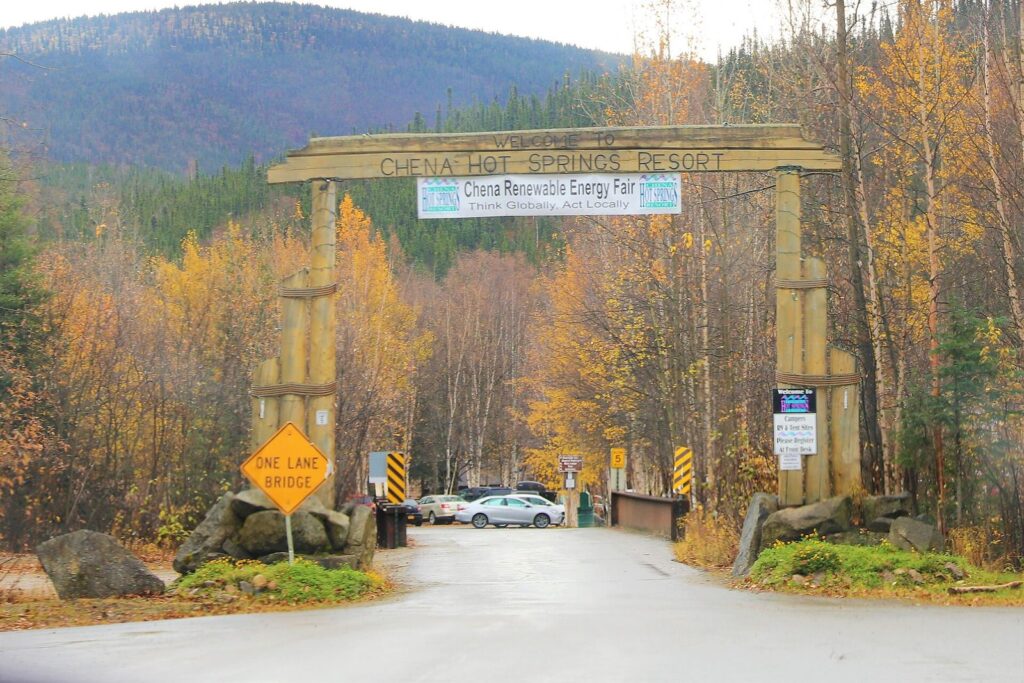
Chena Hot Springs Resort is about 60 miles east of Fairbanks at the end of Chena Hot Springs Road. Its outdoor rock lake is fed by natural hot springs, and soaking there under the aurora is one of Alaska’s classic winter experiences. The resort runs a five-hour Aurora Viewing Tour to Charlie Dome, where you wait in heated yurts. The 2026 published price was $125 per person, and the resort is clear that the aurora can’t be guaranteed or refunded. The resort also operates the Aurora Ice Museum. You can visit as a day trip or stay overnight. Driving the road in winter takes care, and the resort can arrange transfers.
Check the forecast
- University of Alaska Fairbanks Geophysical Institute aurora forecast: Alaska-specific forecasts and maps.
- NOAA Space Weather Prediction Center 30-minute forecast: a short-term view of the auroral oval.
- A cloud forecast matters as much as the aurora forecast. Even a strong display is invisible through overcast.
Photographing the aurora
- Use a tripod (travel tripods on Amazon), a wide-angle lens at its widest aperture, manual focus set to infinity, ISO 1600–3200, and exposures of about 2–15 seconds depending on how bright and fast the display is.
- Recent phones have night modes that do surprisingly well. Brace the phone on something solid.
- Cold drains batteries fast. Keep spares in an inside pocket, and let your camera warm up slowly in a bag to avoid condensation.
- A red-light headlamp (headlamps at REI) protects your night vision and other people’s photos.
Dress for −30°F
Standing still at night in an Interior Alaska winter is much colder than skiing or walking. Plan on a full layering system: a synthetic or wool base layer, an insulating mid layer, a heavy parka, insulated pants, and a warm hat, mittens, and boots rated well below zero. Many tours and lodges rent or loan cold-weather gear. See our Alaska gear and packing list for details, and pack chemical hand and toe warmers.
Make it a trip
- Pick up a free “Aurora Certificate” at the Morris Thompson Cultural & Visitors Center downtown once you’ve seen the lights.
- The Alaska Railroad’s Aurora Winter Train runs on winter weekends between Anchorage and Fairbanks.
- Late winter brings the World Ice Art Championships and sled dog races.
- Food in Fairbanks: after a cold night out, a bowl of curry or noodle soup is hard to beat. Thai Fairbanks is a local guide to Thai restaurants in town.
Where to stay: compare Fairbanks hotels and lodges on Booking.com or see our Alaska lodging guide.